Flour Substitutions

You have a recipe for a delicious cake that uses cake flour, but all you have on hand is all-purpose flour and you just can't go to the store and buy cake flour. What do you do? Or perhaps you have a member in your family diagnosed with Celiac disease, which means she can't eat wheat gluten anymore. What do you do? Quit baking cakes? Or maybe you want to get more whole grains into your diet, so you decide to banish all white flour and white flour products from your kitchen. But your ten year old REALLY wants a cake for her birthday, what do you do?
The answer is: make substitutions! While I won't claim that all your recipes will come out just like they used to I will tell you that you can make delicious baked goods by modifying your recipes and using different kinds of flours. In this article I will give you the basic formulas for the flour substitutions I have been asked about the most. Unfortunately, that does not include gluten free changes. However, I have assembled a couple of good reference links for you to refer to that cover not only flour substitutions, but many other ingredient substitutions as well. You will want to bookmark them for easy reference.
To use all-purpose flour in place of specialty flours such as cake or pastry flour:
Cake Flour: Use 7/8 C (that is 1 C minus 2 T) of all-purpose flour for every cup of Cake Flour
Pastry Flour: Use 7/8 C (that is 1 C minus 2 T) of all-purpose or bread flour for every cup of Pastry Flour.
Reference Links for substitutions:
Colorado State University Extension
Joy of Baking
When replacing white flours with whole wheat flour keep in mind that you are likely to get a much heavier, denser product. You will also need to experiment with each recipe you are making to get a result closer to what you would get with white flours. The basic rule of thumb is:
To replace white flour with whole wheat flour you need 3/4 C of whole wheat flour to replace 1 C of all-purpose flour.
Here are a few more tips for baking with whole wheat flour:
Cookies: reduce butter or shortening by 20%
Cakes: add 1 or 2 T of the liquid
Changing a white bread recipe to whole wheat: may need another 1/4 C or so of liquid
If you are looking for ways to add whole grains to your eating style then you could consider buying whole grain white flour. This flour looks and bakes like white flour but has all the nutritional aspects of whole grain flour. This is a specialty flour that may not be available in all supermarkets but you should be able to find it in a natural food store. If there aren't any of those near you then you can order them from internet sellers such as Kingarthurflour.com
(Disclaimer: I know I've mentioned King Arthur Flour before and I will probably keep mentioning them. They do not pay me or compensate me in any way I just use their flour and quite frankly, it has given me the best results.)
Reference Link for replacing white flour with whole wheat:
Can I substitute whole wheat flour for all purpose flour when baking?
Purchasing Tips:
When buying whole wheat or whole grain flours, read your labels carefully! You should be looking for the phrase "100% whole wheat", not just "whole wheat". Store whole wheat flour in an airtight container and keep it in a cool, dark place (such as your fridge), keep in mind that it can go rancid-yuck!-if you hold on to it for too long.
If you normally buy a generic flour and have moved recently and none of your baked goods are coming out right anymore then consider buying a name brand flour. Generic flours tend to be made regionally and that means the protein and gluten content in the flour vary. When you buy name brand flour, the protein and gluten content are constant because the "formula" is strictly regulated by the company who produces it. Once you adjust your recipe to the new flour, you will be able to rely on it no matter where you move to next.
Note: This blog entry was originally written and published by EMohrhoff at the Dining Dilettante Squidoo page in 2013.
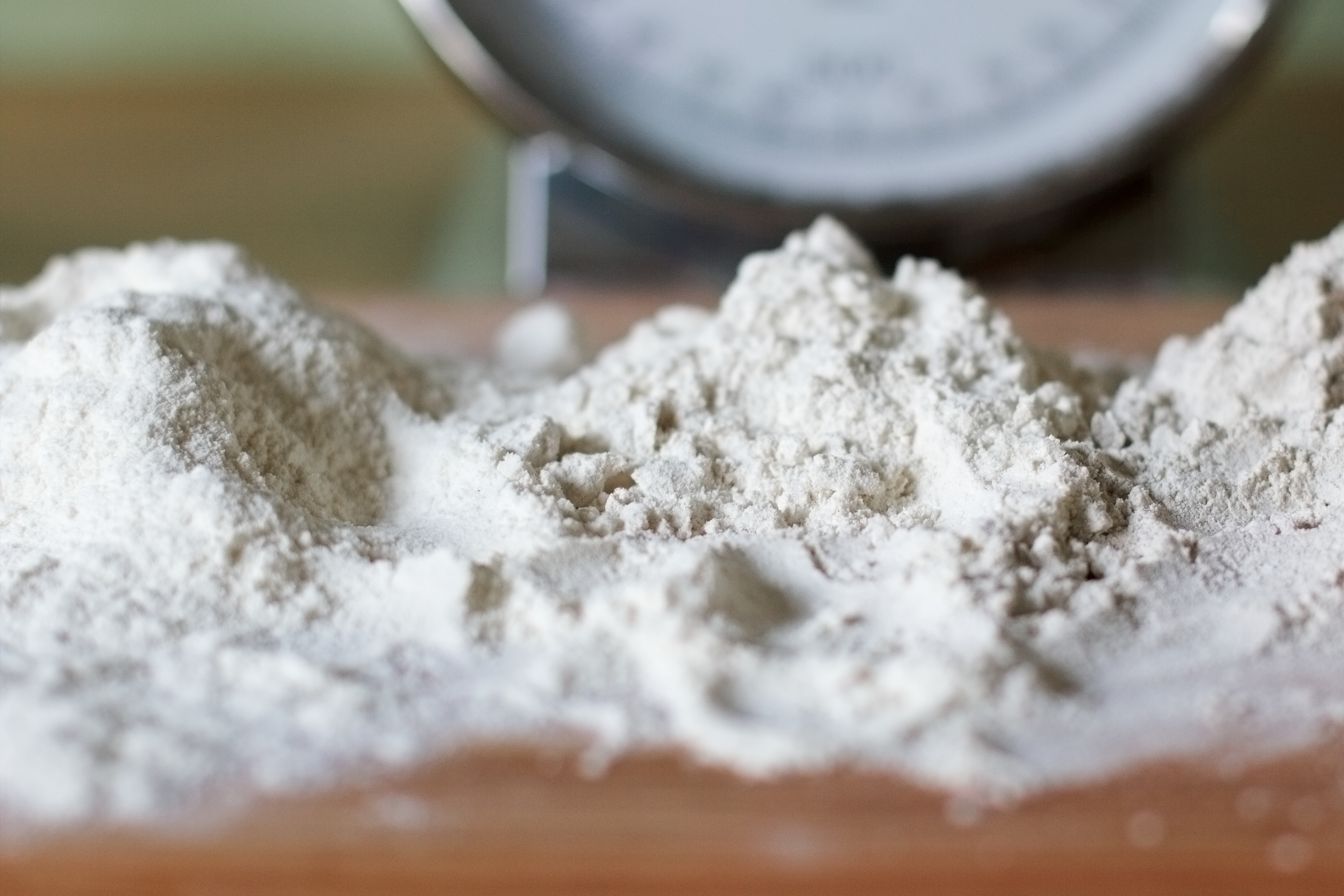
Photo by By Mudd1 (Own work) [CC-BY-SA-3.0 (http://creativecommons.org/licenses/by-sa/3.0)], via Wikimedia Commons
You have a recipe for a delicious cake that uses cake flour, but all you have on hand is all-purpose flour and you just can't go to the store and buy cake flour. What do you do? Or perhaps you have a member in your family diagnosed with Celiac disease, which means she can't eat wheat gluten anymore. What do you do? Quit baking cakes? Or maybe you want to get more whole grains into your diet, so you decide to banish all white flour and white flour products from your kitchen. But your ten year old REALLY wants a cake for her birthday, what do you do?
The answer is: make substitutions! While I won't claim that all your recipes will come out just like they used to I will tell you that you can make delicious baked goods by modifying your recipes and using different kinds of flours. In this article I will give you the basic formulas for the flour substitutions I have been asked about the most. Unfortunately, that does not include gluten free changes. However, I have assembled a couple of good reference links for you to refer to that cover not only flour substitutions, but many other ingredient substitutions as well. You will want to bookmark them for easy reference.
To use all-purpose flour in place of specialty flours such as cake or pastry flour:
Cake Flour: Use 7/8 C (that is 1 C minus 2 T) of all-purpose flour for every cup of Cake Flour
Pastry Flour: Use 7/8 C (that is 1 C minus 2 T) of all-purpose or bread flour for every cup of Pastry Flour.
Reference Links for substitutions:
Colorado State University Extension
Joy of Baking
When replacing white flours with whole wheat flour keep in mind that you are likely to get a much heavier, denser product. You will also need to experiment with each recipe you are making to get a result closer to what you would get with white flours. The basic rule of thumb is:
To replace white flour with whole wheat flour you need 3/4 C of whole wheat flour to replace 1 C of all-purpose flour.
Here are a few more tips for baking with whole wheat flour:
Cookies: reduce butter or shortening by 20%
Cakes: add 1 or 2 T of the liquid
Changing a white bread recipe to whole wheat: may need another 1/4 C or so of liquid
If you are looking for ways to add whole grains to your eating style then you could consider buying whole grain white flour. This flour looks and bakes like white flour but has all the nutritional aspects of whole grain flour. This is a specialty flour that may not be available in all supermarkets but you should be able to find it in a natural food store. If there aren't any of those near you then you can order them from internet sellers such as Kingarthurflour.com
(Disclaimer: I know I've mentioned King Arthur Flour before and I will probably keep mentioning them. They do not pay me or compensate me in any way I just use their flour and quite frankly, it has given me the best results.)
Reference Link for replacing white flour with whole wheat:
Can I substitute whole wheat flour for all purpose flour when baking?
Purchasing Tips:
When buying whole wheat or whole grain flours, read your labels carefully! You should be looking for the phrase "100% whole wheat", not just "whole wheat". Store whole wheat flour in an airtight container and keep it in a cool, dark place (such as your fridge), keep in mind that it can go rancid-yuck!-if you hold on to it for too long.
If you normally buy a generic flour and have moved recently and none of your baked goods are coming out right anymore then consider buying a name brand flour. Generic flours tend to be made regionally and that means the protein and gluten content in the flour vary. When you buy name brand flour, the protein and gluten content are constant because the "formula" is strictly regulated by the company who produces it. Once you adjust your recipe to the new flour, you will be able to rely on it no matter where you move to next.
Note: This blog entry was originally written and published by EMohrhoff at the Dining Dilettante Squidoo page in 2013.
Photo by By Mudd1 (Own work) [CC-BY-SA-3.0 (http://creativecommons.org/licenses/by-sa/3.0)], via Wikimedia Commons
Comments
Post a Comment